
Danskerkortet
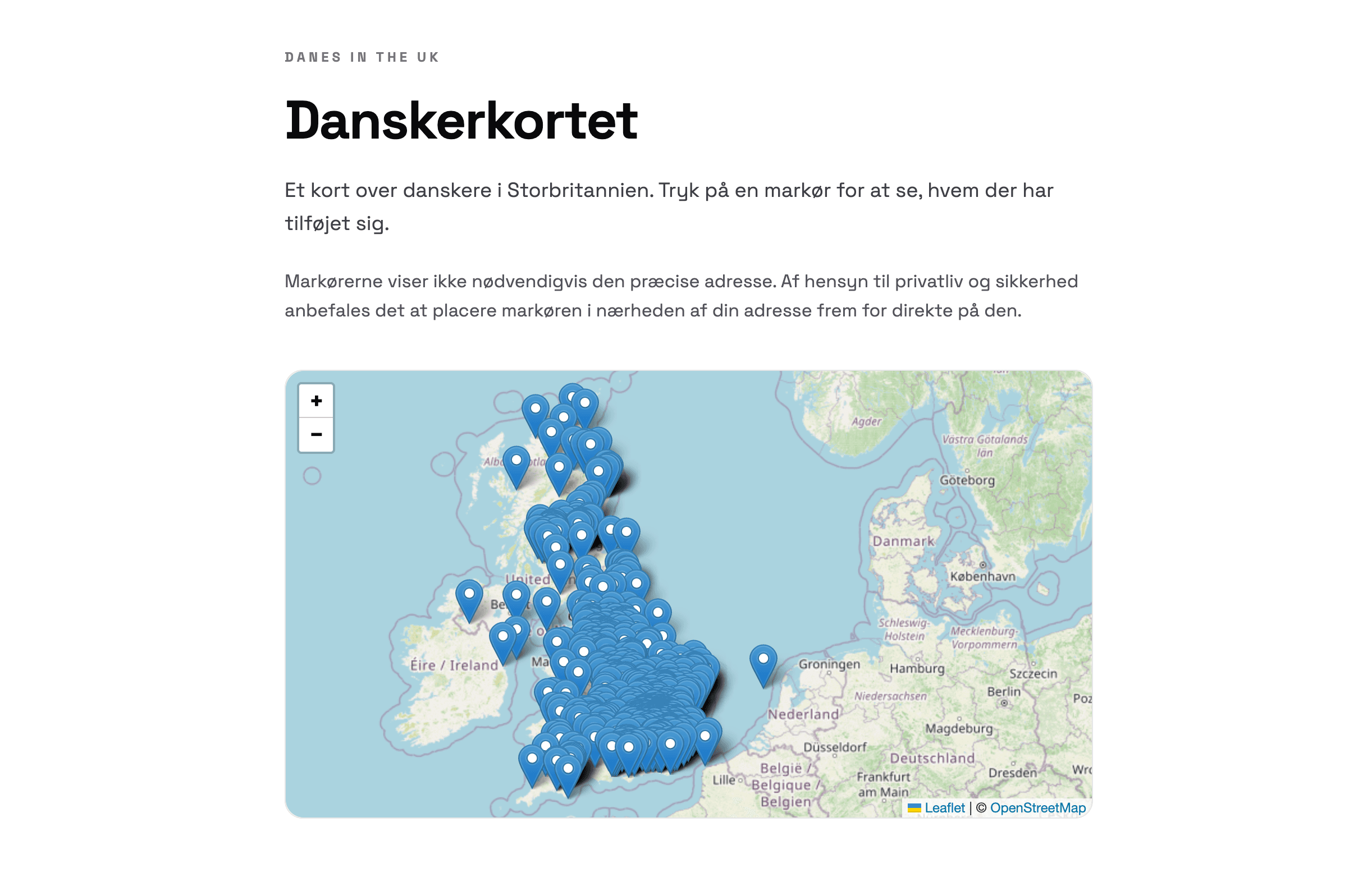
An interactive map of Danes living across the UK - built from scratch in Next.js with browser geolocation, privacy-conscious location handling, and a simple way for people to add themselves.
The brief
The idea for Danskerkortet came from a simple question in a Danish Facebook group: where do all the Danes in the UK actually live?
Rather than trying to find an existing answer, I built one. Danskerkortet lets Danes add themselves to a shared map, making it easy to see where Danish communities are concentrated and find other Danes nearby.
The build
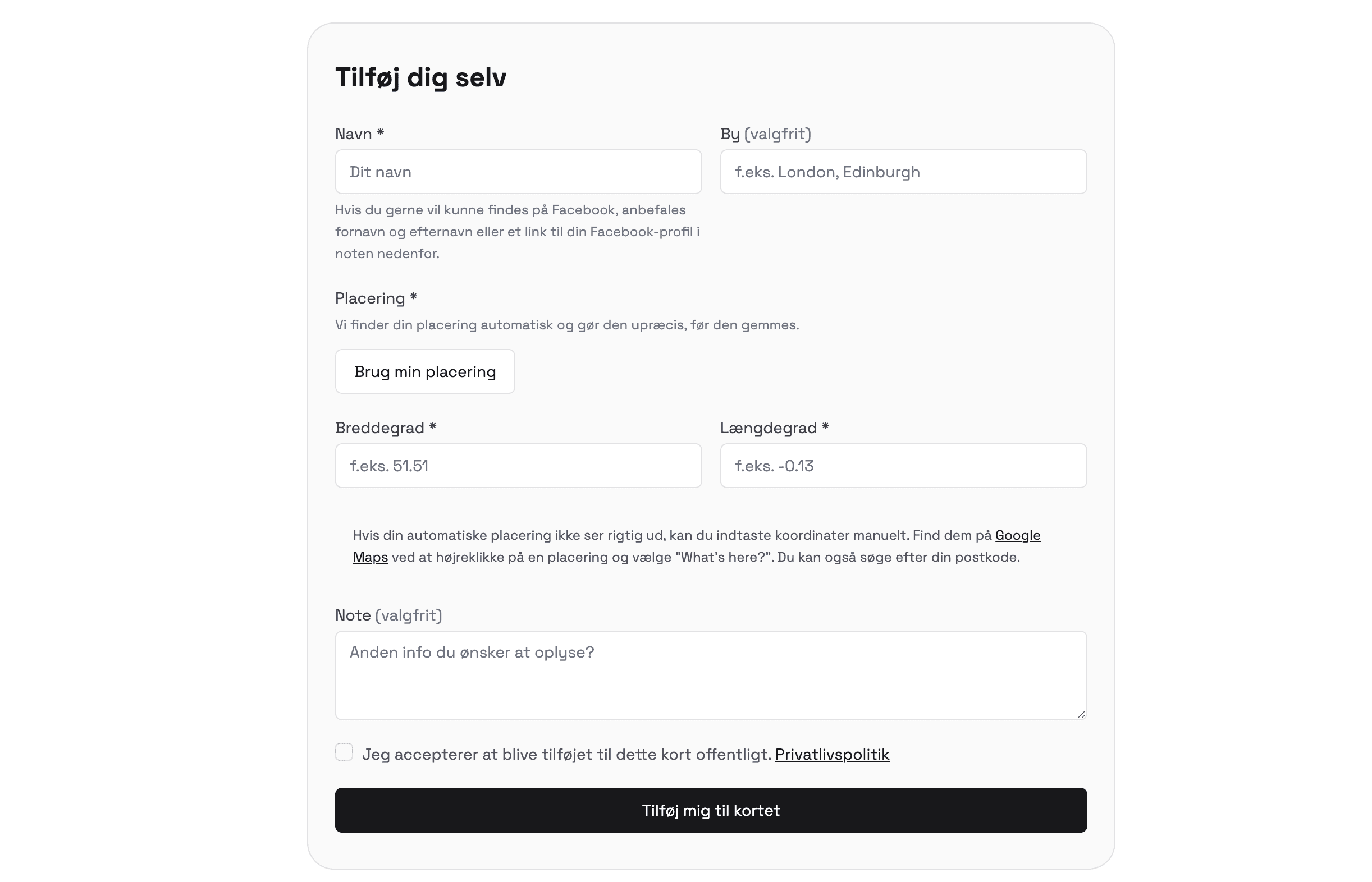
I built the project from scratch in Next.js, combining an interactive map with a simple submission flow. The browser can automatically find the visitor's approximate location, while a draggable map marker gives them control over where their pin is placed.
Because the project deals with people's locations, privacy was part of the design rather than an afterthought. Locations are deliberately stored at reduced precision, with clear information about what is collected and why.
Key features
Interactive UK map
A shared map makes the distribution of Danes across the UK immediately visible, turning a simple question into something people can explore.
Automatic approximate location
Browser geolocation makes adding a pin quick and easy, with a draggable marker available when the user wants to adjust it.
Privacy-conscious by design
Location data is deliberately reduced in precision, with clear privacy information and controls built into the submission experience.
The result
The map has grown into a genuinely useful community resource, with more than 800 Danes now represented across the UK. It has already helped people find other Danes nearby and arrange meetups in real life. What started as a small answer to a Facebook-group question became a live digital product used by a community I am part of.